 Austria
 Belgium
 Czech Republic
 Denmark
 English (world)
 Finland
 France
 Germany
 Italy
Italy Netherlands
 Poland
 Portugal
 Spain
Spain Sweden
 USA
USA


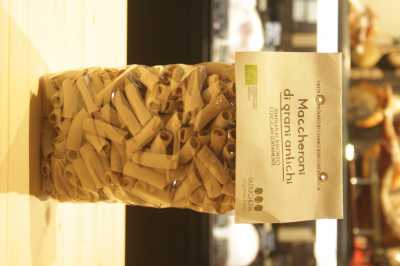
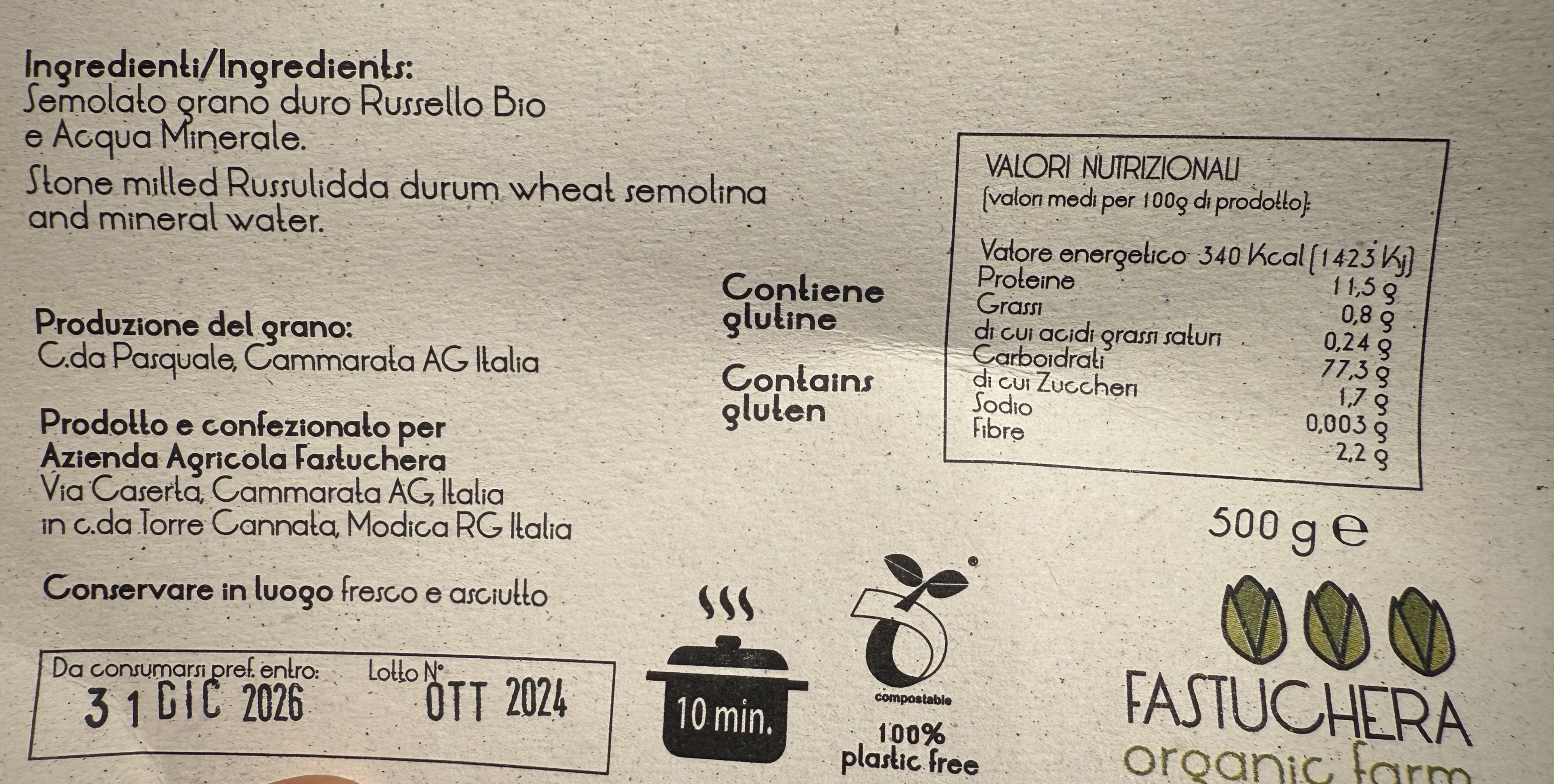
Märke: Fastuchera Azienda Agricola
Format : 500 g
: 1
Fastuchera was born a few years ago in Cammarata, in the province of Agrigento, as an experience of rediscovery and reappropriation of the land.
Animated by the desire to safeguard and enhance the island's agrobiodiversity, we think that producing healthy foods that respect the environment and people is the ethical duty of every farmer.
Fastuchera currently organically grows ancient Sicilian grains, from which it makes stone-milled flours and artisanal pasta, legumes, olive trees and dried fruits; it is the official headquarters of a Field for the conservation of Sicilian ancient fruit germplasm and a nascent Sicilian Ethnobotanical Garden.
In an area where there is a monoculture of modern grains destined for industry, recovering the seeds of some ancient grains, resuming their cultivation and producing our own flour, our own pasta, has meant regaining autonomy for us. A path of re-appropriation that first of all originated from, and continues to be animated by, not economic but ethical choices.
Choosing to grow ancient grains in fact means producing little, but it also means being able to produce without chemicals, giving value back to the millennial work of the generations that preceded us, obtaining healthy foods that nourish and make those who consume them feel good.
Format : 500 g
: 1
Fastuchera was born a few years ago in Cammarata, in the province of Agrigento, as an experience of rediscovery and reappropriation of the land.
Animated by the desire to safeguard and enhance the island's agrobiodiversity, we think that producing healthy foods that respect the environment and people is the ethical duty of every farmer.
Fastuchera currently organically grows ancient Sicilian grains, from which it makes stone-milled flours and artisanal pasta, legumes, olive trees and dried fruits; it is the official headquarters of a Field for the conservation of Sicilian ancient fruit germplasm and a nascent Sicilian Ethnobotanical Garden.
In an area where there is a monoculture of modern grains destined for industry, recovering the seeds of some ancient grains, resuming their cultivation and producing our own flour, our own pasta, has meant regaining autonomy for us. A path of re-appropriation that first of all originated from, and continues to be animated by, not economic but ethical choices.
Choosing to grow ancient grains in fact means producing little, but it also means being able to produce without chemicals, giving value back to the millennial work of the generations that preceded us, obtaining healthy foods that nourish and make those who consume them feel good.
| Har du frågor om produkten? Skriv ditt svar (offentligt) så svarar vi så snart som möjligt |